
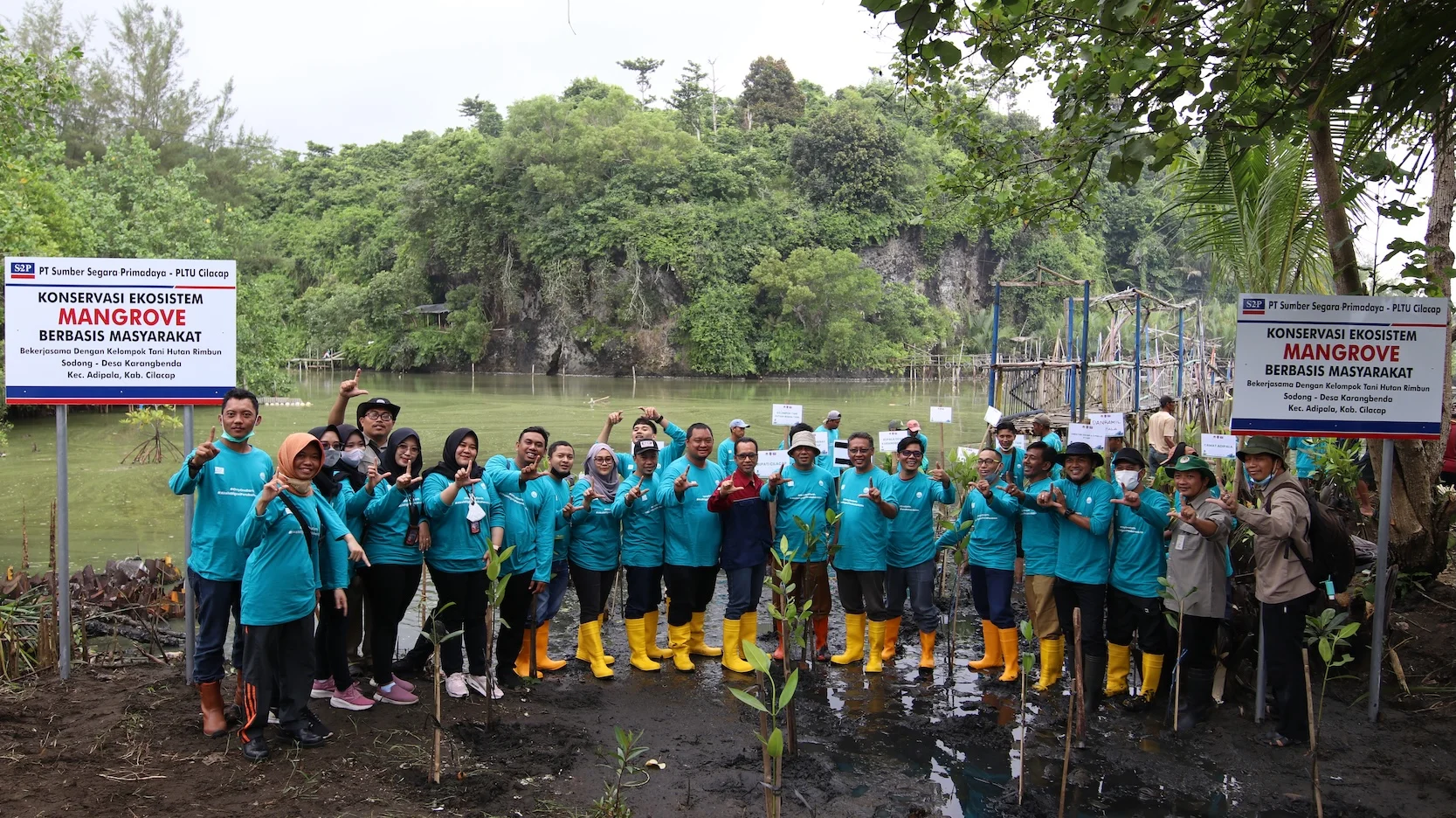
Biodiversity is an important ecological asset for ecosystem balance, the provision of natural resources, and a buffer against the impacts of climate change. PT Sumber Segara Primadaya (S2P) is committed to implementing, monitoring, and evaluating biodiversity protection efforts throughout the company's areas as a form of care for biodiversity protection, including through conservation programs that cover ex-situ animal conservation, coral reef transplantation, mangrove and coastal plant vegetation conservation, conservation of Cilacap Regency's endemic flora, and environment-based community economic empowerment. In addition, PT Sumber Segara Primadaya provides access for stakeholders to develop information and increase knowledge in the field of biodiversity regarding the biodiversity protection programs implemented by PT Sumber Segara Primadaya.

Why Biodiversity Is Important
• Ecosystem balance - every species plays a role in interconnected food chains and ecological cycles.
• Carbon sink and climate change mitigation – mangroves, sea pines, and coral reefs act as natural carbon sinks (blue carbon) and protect coasts from erosion.
• Source of germplasm - endemic flora and fauna preserve genetic richness for future generations.
• Educational and ecotourism value - conservation areas serve as environmental education facilities as well as local ecotourism potential.
• Improving community welfare - environmental conservation combined with economic empowerment provides direct benefits to local residents.
As an effort to protect biodiversity, PT S2P has implemented several biodiversity protection programs that are ongoing and continuing to develop. The activities consist of:
1. Ex-situ Fauna Conservation
Ex-situ conservation is the preservation of animals outside their natural habitats. PT Sumber Segara Primadaya conducts ex-situ conservation through breeding and care, as stipulated in the Decree of the Technical & Operational Director of PT Sumber Segara Primadaya Number 0273/DIRTEK&OP S2P/III/2023. This activity aims to protect animal populations from the threat of extinction, support education, and facilitate research and breeding. The program pays close attention to animal welfare, feed availability, routine health care, and the maintenance of artificial habitats that resemble natural conditions. The preserved animal species include:
The benefits of this program include preserving animal populations from extinction threats, providing conservation education facilities for the community and students, and supporting educational ecotourism potential based on wildlife.
|
|
|
|
2. Coral Reef Biodiversity Conservation
Coral reefs are marine ecosystems with the highest biodiversity, serving as marine life habitats, natural shoreline protectors against erosion, and indicators of marine ecosystem health. This program is carried out through coral transplantation and the placement of artificial reef structures in the form of hollow cubes in the port waters of PT Sumber Segara Primadaya to accelerate the regeneration and colonization of new corals.
|
|
3. Mangrove Vegetation Conservation
Mangrove ecosystems play a crucial role as shoreline protectors from erosion and extreme waves, habitats for various marine and terrestrial species, natural filters for coastal pollution, and blue carbon sinks in quantities much higher than terrestrial forests. This program includes planting mangrove seedlings, periodic growth monitoring and maintenance inside and outside PT Sumber Segara Primadaya's area, as well as involving the local community.
|
|
4. Coastal Vegetation Conservation
In addition to mangroves, coastal plants such as Beach She-oak (Cemara Laut) serve as wind and coastal erosion barriers, while enriching vegetation along the coastline of operational areas and surroundings. The plant species used is Beach She-oak (Casuarina equisetifolia).
The benefits achieved by this program include strengthening the natural protection of coastal areas from wind and erosion, increasing green vegetation cover along the coast, and supporting the aesthetics and comfort of coastal areas for community activities, including as mooring and shelter spots for local fishermen's boats around PT Sumber Segara Primadaya.


5. Endemic Flora Conservation
Endemic and rare flora have high conservation value due to their limited presence and vulnerability to extinction caused by land-use changes and environmental shifts. Preserving endemic flora aims to safeguard local germplasm richness, specifically the flora native to Nusakambangan Island, Cilacap Regency: Wijaya Kusuma Keraton (Pisonia grandis var. silvestris). Through this program, it is expected to preserve rare/endemic flora from extinction, maintain the cultural and historical values attached to the plant, and serve as a botanical education tool for the public and students.

6. Fruit Village as a Community Economic Solution (KANG BASKOM)
A community economic empowerment program combining environmental conservation with improving the welfare of residents around operational areas by planting productive fruit trees on community land as an additional income source and strengthening local food security. Implemented through cultivation guidance, distribution of superior seedlings, and garden management training, with targets including:
• Increase in the number of fruit plant seedlings distributed and/or planted
• Increase in a portion of community income from fruit sales.

Summary & Conclusion
The company carries out 6 biodiversity protection programs covering ex-situ animal conservation, coral reef biodiversity conservation, mangrove vegetation conservation, coastal plant conservation, endemic flora conservation, and fruit village as a community economic solution.
The management conducted by PT S2P has yielded a positive impact on increasing biodiversity. This data can be observed in the increase of absolute values for each program over the last 5 years (2022–2026) as follows:
No | Program | Parameter | Absolute Year | Descriptiom | ||||
2022 | 2023 | 2024 | 2025 | 2026 | ||||
1 | Ex-situ Fauna Conservation | Chital (Axis axis) | 1 | 1 | 1 | 1 | 1 | Individu |
Merino Sheep (Ovis aries) | 3 | 3 | 3 | 6 | 7 | |||
Indian Peafowl (Pavo cristatus) | 5 | 5 | 6 | 6 | 6 | |||
Dromedary Camel (Camelus Dromedarius) | - | - | - | 2 | 2 | |||
2 | Coral Reef Biodiversity Conservation | Artificial Coral Reef | 1 | 1 | 1 | 5 | 5 | Spesies |
Artificial Coral Reef | 410 | 410 | 410 | 410 | 410 | m2 | ||
3 | Mangrove Vegetation Conservation | Mangrove | 8338 | 9338 | 9338 | 13065 | 18065 | Cumulative Individuals |
4 | Coastal Vegetation Conservation | Beach She-oak | 1600 | 1893 | 2933 | 4718 | 5718 | Cumulative Individuals |
5 | Endemic Flora Conservation | Wijaya Kusuma Keraton | 2 | 2 | 2 | 4 | 6 | Cumulative Individuals |
6 | Fruit Village as a Community Economic Solution (KANG BASSKOM) | Fruit Plant Seedlings | - | - | - | - | 500 | Cumulative Individuals |


